Skip to content
abdullah.

Service / Custom Software Development

Custom Software Development Services for real workflows.

Turn a business problem, manual workflow, or difficult requirement into software that people can use and maintain.

Engagement fit

Best fit for

  • Teams replacing a manual or fragmented operating workflow
  • Founders with a validated problem but no dependable product yet
  • Existing products that need one difficult feature owned end to end
01The problem

When the workflow has outgrown its tools

Custom software earns its place when an important workflow is carried by spreadsheets, inboxes, and memory.

Before

The workflow today

  1. SpreadsheetSeveral people edit the same state with no validation.
  2. Inbox approvalsDecisions are made in replies and are hard to find later.
  3. Copy-pasteRecords are re-typed between tools, so they drift.
  4. MemorySomeone has to remember the next step and the exceptions.

After

One owned workflow

  1. Structured intakeA form or integration creates a validated record.
  2. Rules and routingThe application moves the record to the right person or system.
  3. Decision pointA person reviews, approves, or overrides — with context on screen.
  4. Recorded outcomeResult, evidence, and next action stay attached to the record.

The goal is not more software; it is one place where the workflow’s state, decisions, and history live.

02Workflow map

From operating problem to owned software

Workflow map
  1. 01SpreadsheetShared state nobody owns
  2. 02Inbox threadApprovals buried in replies
  3. 03Manual handoffThe next step lives in one person’s memory→ to 04 Workflow
  4. 04WorkflowUsers, decisions, records, exceptions
  5. 05Product boundaryCritical path and acceptance conditions
  6. Working system06InterfaceScreens people act from
  7. 07Application logicRules, roles, state
  8. 08DataOwned, validated records
  9. 09IntegrationsPayments, identity, notifications
  10. 10OwnershipTests, deployment, documentation, handoff
  • Today’s scattered inputs
  • Owned workflow
  • System boundary

A useful custom system starts with the decision and data boundary, not a feature list.

03Build or buy

Keep the tool, or build the workflow?

Buy the commodity layer; build what makes the workflow distinct. The custom software vs SaaS guide covers lifetime cost and reversible first steps.
Keep the SaaS toolBuild custom
Workflow fitThe tool supports how decisions are actually madeWorkarounds create repeated manual handoffs
DataRecords fit the vendor’s modelRecords, history, or permissions are specific to the business
IntegrationSupported connectors are enoughSystems need custom rules or synchronization
ChangeThe process is stable and standardThe workflow is a differentiator that will keep changing

A hybrid is common: SaaS for authentication, payments, and email; custom for the workflow and data model.

04Capabilities

What can be built

  1. 01

    Internal operations tools and workflow systems

  2. 02

    Customer-facing application features and portals

  3. 03

    Data-backed dashboards with clear actions

  4. 04

    Payments, identity, notifications, and external-service integrations

05Delivery

From scope to a working release

  1. 01Map

    Map the user, decision, data, and integration boundary

  2. 02Build

    Build the smallest complete workflow with real states

  3. 03Hand over

    Test, deploy, document, and hand over the working system

What you should have at handoff

  • A maintainable application your team owns
  • Fewer manual handoffs and clearer operational state
  • A focused foundation that can grow with evidence
06Proof

Relevant work

Public builds with live products and source you can inspect. No private client metrics are claimed.

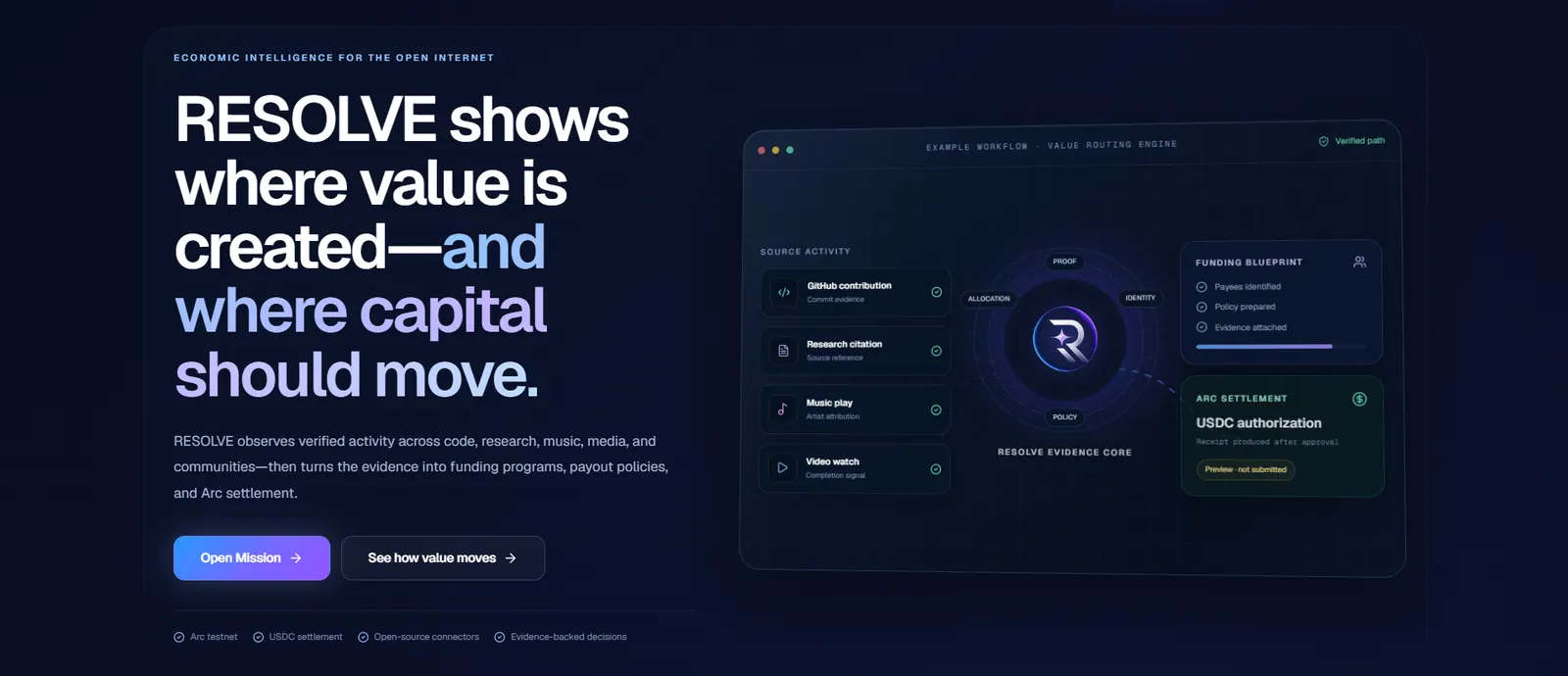
RESOLVE contribution evidence and funding workflow interface

Evidence-backed contribution funding

RESOLVE

A contribution-funding platform that turns verified evidence into policy-checked allocations, with USDC escrow settlement on Arc Testnet.

Why it is relevantA custom funding workflow: contribution evidence, attribution, treasury, and settlement states modeled as one inspectable system.

  • Evidence connectors and identity resolution
  • Versioned policy snapshots with lineage hashes
  • Quadratic funding in bigint micro-USDC
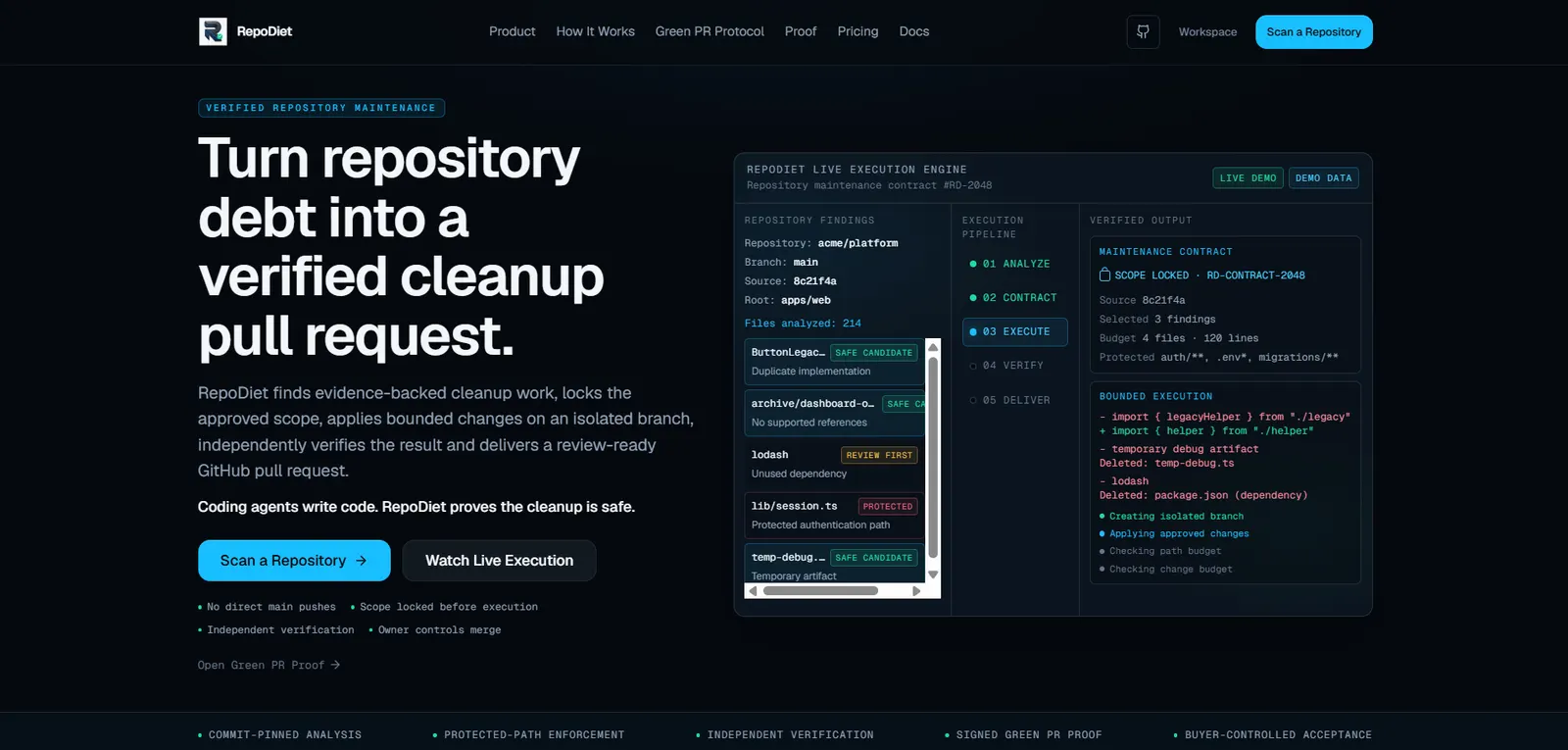
RepoDiet repository maintenance and verification interface

Contract-bound repository maintenance

RepoDiet

Repository maintenance for JS/TS codebases: evidence-gated triage, a signed change contract, bounded changes on an isolated branch, and a signed verification receipt.

Why it is relevantA maintenance workflow built around contracts, verification, and receipts rather than a generic tool.

  • Evidence-gated triage (Knip, jscpd, Madge)
  • Signed, commit-pinned change contracts
  • Separate verifier role and signing key
07Stack

Technical approach

Application
  • TypeScript
  • Next.js
  • React

One language across interface and server logic keeps the system easier to hand over.

Data
  • Postgres
  • Supabase
  • Prisma

Relational records with constraints for workflows that need history and ownership.

Integration
  • REST APIs
  • Webhooks
  • GitHub

Connected to the systems the workflow already depends on.

Delivery
  • Vercel
  • Preview deployments

Every change reviewable before release; rollback available.

Projects commonly use TypeScript, Next.js, React, SQL-backed models, Supabase, Postgres, Prisma, REST APIs, webhooks, GitHub, and Vercel. The stack follows the workflow, security boundary, and maintenance need—not a generic checklist.

Remote delivery is structured for clients in the United States, United Kingdom, Canada, and other international markets: written scope, asynchronous progress, scheduled overlap, repository ownership, acceptance criteria, and a deployment handoff are made explicit.
08Questions

Questions about custom software development

When does custom software make sense instead of another SaaS tool?

Custom software is useful when the workflow, data, permissions, or integrations create a meaningful advantage that standard tools cannot support without heavy workarounds.

Can you work with an existing codebase?

Yes. A defined feature, repair, or workflow can be delivered inside an existing codebase after its architecture, access, and acceptance conditions are understood.

Can you handle product design and backend together?

Yes. The engagement can connect user flow, interface, application logic, data, integrations, testing, and deployment as one delivery path.

What should I prepare before we start?

Share the user, current workflow, desired result, constraints, useful links, and any systems the product must connect to. An early brief is enough to begin scoping.

PROJECT INQUIRY

Discuss your custom software project.

Share the goal, current state, constraints, and useful links. I’ll help identify the most useful path forward.