Skip to content
abdullah.

Service / SaaS Development

SaaS Product Development Services for a useful first release.

Build a SaaS application around the job a customer needs done, then make the account, data, interface, and operating workflow work together.

Engagement fit

Best fit for

  • Founders preparing a focused SaaS launch
  • Teams turning a prototype into an account-based product
  • Products that need roles, data, admin, and integrations to work together
01Account → tenant → billing → operations

The first complete SaaS release

Account → tenant → billing → operations
  1. 01CustomerArrives with one job to get done
  2. Customer workflow02Sign-up & activationThe first session reaches the core outcome
  3. 03Account modelOrganization, members, invitations⇢ plan state: to 08 Billing-adjacent states
  4. 04Roles & permissionsEnforced on the server, per record
  5. 05Customer jobThe workflow the product is sold for
  6. Operator workflow06Product recordsOwned data, history, exports, deletion⇢ usage evidence: to 09 Release loop
  7. 07Admin & supportOperational views and safe support access◆ to 06 Product records
  8. 08Billing-adjacent statesPlan, trial, limits — only where release needs them
  9. 09Release loopDeploy, observe, prioritize⇢ next scope: to 02 Sign-up & activation
  • Customer path
  • State and feedback
  • Operator action

Accounts and screens only become a product when the customer and operator workflows connect.

02Signals

Signs you are ready for a SaaS build

  • You have a clear customer problem but need the first application shaped and built.
  • A prototype proves interest but cannot support real users or reliable data.
  • Your team needs a focused engineer who can own the critical path to launch.
03Scope

What the first release needs — and what can wait

Scope follows the customer job, not a feature list. See what actually changes SaaS MVP scope.
First releaseAfter real usage shows the need
AccountsSign-up, sign-in, one organization per customerMultiple workspaces, SSO, advanced invitations
RolesThe two or three roles the core job requiresCustom roles and fine-grained permission editors
BillingOnly the plan or trial states that gate the core jobUsage metering, proration, invoicing edge cases
AdminSupport lookup, account status, safe correctionsFull back-office tooling and bulk operations
AnalyticsActivation and core-job eventsDashboards for every screen

Each “later” item is added when real usage shows the need, not before.

04Capabilities

What can be built

  1. 01

    Multi-page SaaS applications and dashboards

  2. 02

    Authentication, roles, data models, and account flows

  3. 03

    Billing or payment-adjacent workflows where appropriate

  4. 04

    Admin views, feedback loops, and release-ready deployment

05Delivery

From scope to a working release

  1. 01Define

    Define the first customer job and activation path

  2. 02Connect

    Connect accounts, permissions, records, and operational views

  3. 03Ship

    Ship a measured release and prioritize from observed use

What you should have at handoff

  • A usable customer workflow rather than disconnected screens
  • Clear account, data, and administration boundaries
  • A release-ready application with an owned repository
06Proof

Relevant work

Public builds with live products and source you can inspect. No private client metrics are claimed.

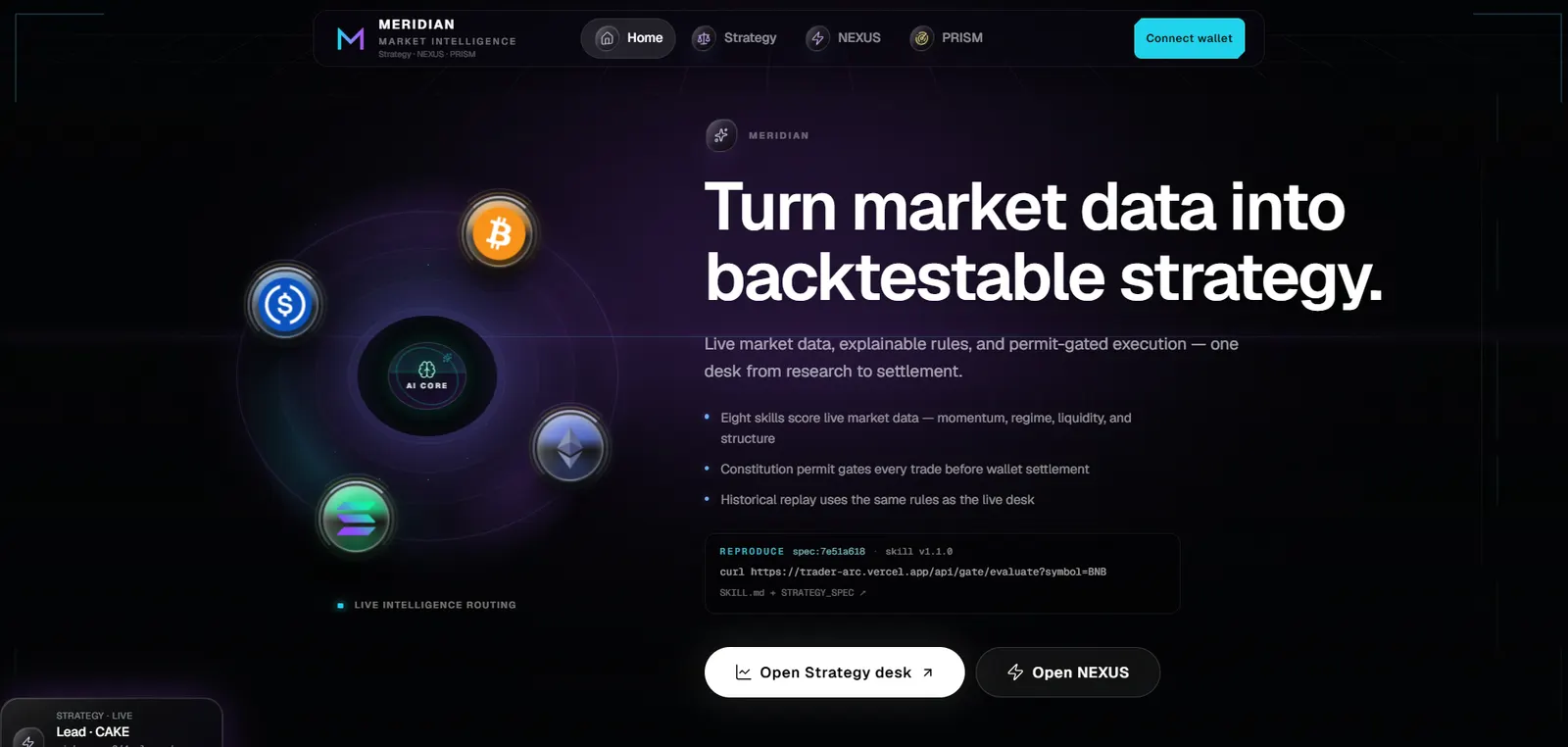
MERIDIAN market intelligence and strategy replay interface

Explainable market-strategy desk

MERIDIAN

A market-strategy desk where deterministic skills and a nine-check gate decide, a constitution permit allows or denies, and wallet-signed swaps execute on BSC Testnet.

Why it is relevantA co-built product surface where market data, a gated strategy, and replay work together as one workflow.

  • Eight deterministic market skills
  • Nine-check gate and GRANT/DENY permit
  • Versioned replay against a baseline
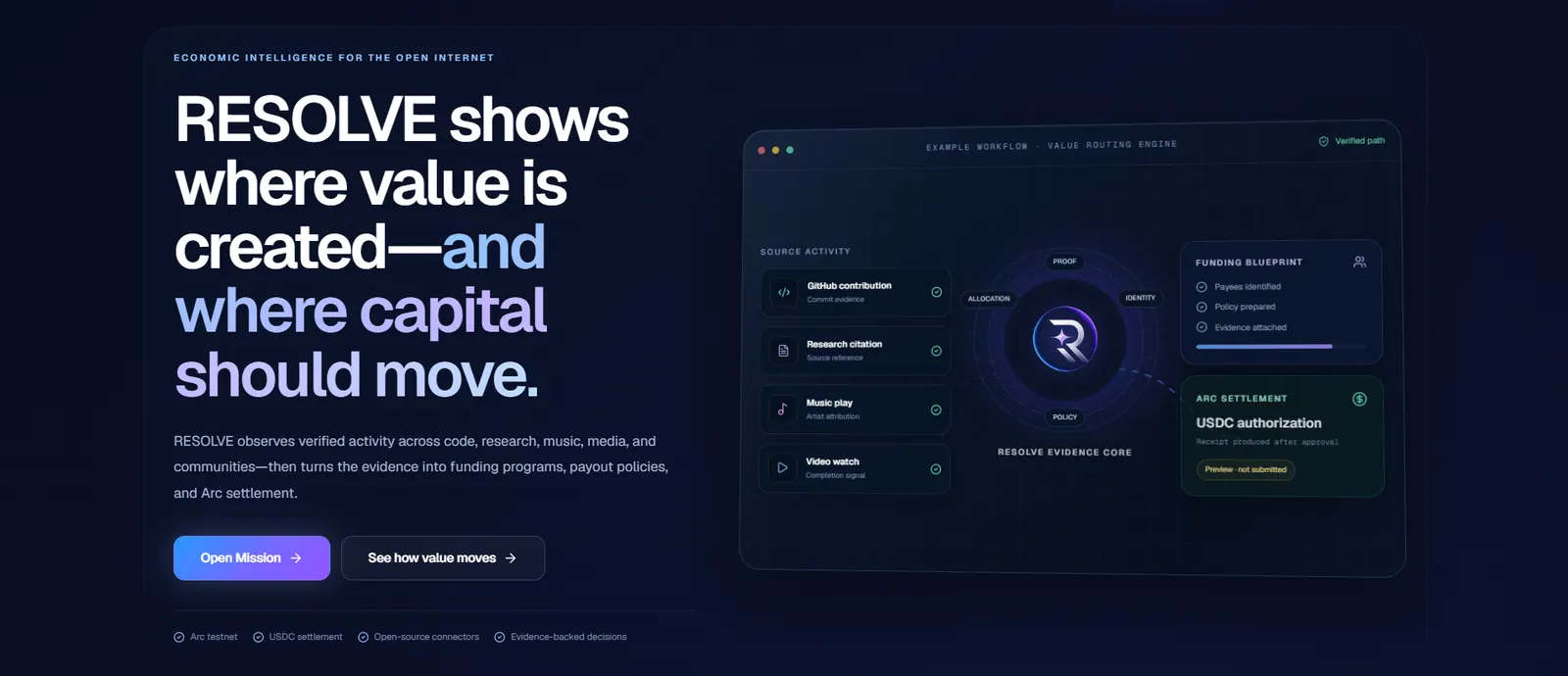
RESOLVE contribution evidence and funding workflow interface

Evidence-backed contribution funding

RESOLVE

A contribution-funding platform that turns verified evidence into policy-checked allocations, with USDC escrow settlement on Arc Testnet.

Why it is relevantStructured records, funding states, and settlement flow behind a single product interface.

  • Evidence connectors and identity resolution
  • Versioned policy snapshots with lineage hashes
  • Quadratic funding in bigint micro-USDC
07Stack

Technical approach

Product
  • Next.js
  • React
  • TypeScript

Server-rendered pages with interactive dashboards where the workflow needs them.

Accounts
  • Auth provider
  • Role checks on the server

Identity bought, authorization designed around the product’s records.

Data
  • Postgres
  • Supabase
  • Prisma

Tenant-scoped records, exports, and deletion planned from the start.

Operations
  • Admin views
  • Event tracking
  • Vercel

Support and release loops are part of the first release.

Projects commonly use TypeScript, Next.js, React, SQL-backed models, Supabase, Postgres, Prisma, REST APIs, webhooks, GitHub, and Vercel. The stack follows the workflow, security boundary, and maintenance need—not a generic checklist.

Remote delivery is structured for clients in the United States, United Kingdom, Canada, and other international markets: written scope, asynchronous progress, scheduled overlap, repository ownership, acceptance criteria, and a deployment handoff are made explicit.

08Questions

Questions about SaaS development

Can you build a SaaS product from an early idea?

Yes. The first step is to define the customer job, smallest complete workflow, account model, operational needs, and assumptions the first release must test.

Can billing, roles, and admin workflows be included?

Yes, when they are needed for the first useful release. They are scoped around real account, permission, support, and product requirements.

Can you improve an existing SaaS product?

Yes. A project can focus on activation, a difficult feature, data architecture, integrations, performance, or a clearer operational workflow.

What does the client own?

The client should control the repository, deployment, data services, and essential third-party accounts, with documentation for release and handoff.

PROJECT INQUIRY

Discuss your SaaS product.

Share the goal, current state, constraints, and useful links. I’ll help identify the most useful path forward.